Recommendation Marketing’s first verification cycle should measure whether the way a business is represented across its Frozen Question Set has moved beyond the normal variability recorded in its baseline.
It should not call that movement a trend, a cause, a forecast, or a business result.
That distinction is the beginning of Recommendation Measurement, the measurement practice within Recommendation Marketing. The questions were frozen before the results were known. The baseline was recorded before the improvement work began. The first verification cycle is the first scheduled return to those same questions under comparable conditions.
It is the first honest comparison. It is not a verdict.
TL;DR
- A first verification cycle returns to the same Frozen Question Set after the baseline, under comparable conditions and on a schedule set in advance.
- It measures four things: movement beyond normal variability, where the movement occurred, whether the measurement conditions held, and what work occurred between observations.
- It refuses four conclusions: trend, attribution, forecast, and verdict.
- A flat first cycle is not necessarily failure. It may show that the baseline was honest and the measurement was not timed to flatter the work.
- Movement in visibility is not yet engagement. Without engagement, the first cycle is not entitled to claim opportunity.
The Third Step in Honest Measurement
Recommendation Measurement begins with control, not celebration.
The Frozen Question Set establishes which buyer questions will be observed before anyone knows which answers will look favorable. The baseline records how those questions are answered before the work begins, including how much the answers vary without intervention.
That normal range of movement is the variability envelope. In plain English, it tells us how much change may occur on its own.

The first verification cycle then returns to the same questions under comparable conditions at a time chosen in advance. If the observation is taken only when the numbers happen to look good, the measurement has already been compromised.
What the First Verification Cycle Measures
1 Movement beyond normal variability
For each question in the Frozen Question Set, did the answer move by more than the baseline showed it normally moves on its own?
Movement inside the recorded range is ordinary variability. Movement beyond it is a candidate for a meaningful change in standing. Candidate matters. One favorable observation deserves attention, not a conclusion.
2 Where the movement occurred
A responsible first report shows which questions moved, which did not, and in what direction. It does not hide the pattern inside one blended score.
A blended score is where bad news goes to hide.
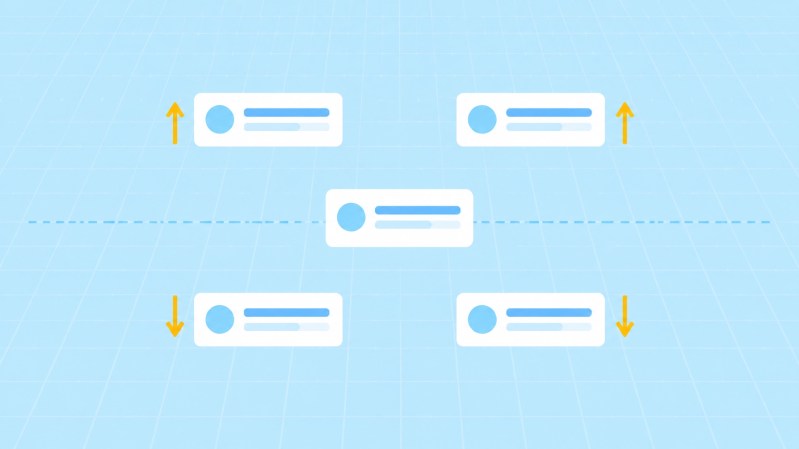
Three questions improving while two decline is a different management problem from five questions moving slightly upward, even if the average looks identical. The location of the movement tells the business where to look next.
3 Whether the conditions held
Before interpreting movement, the cycle checks whether the measurement itself remained comparable. Were the same questions used? Were the relevant conditions held? Did the whole set move at once?
A whole-set shift may indicate that the systems being observed changed their behavior. That is drift, not necessarily a change in the business’s standing. Recommendation Measurement cannot eliminate model drift. It can look for its signature and limit what the report is allowed to claim.
4 What work occurred
The report should record what was published, clarified, corrected, restructured, or earned between observations.
The work log does not establish attribution. It creates the record that may make attribution possible across later cycles. Without it, future reports may show movement but have no defensible way to connect that movement to what the business actually did.
The Recommendation Measurement rule: measure movement against the recorded baseline, question by question, under comparable conditions, on a schedule set in advance, with the work logged. The product of the first cycle is a trustworthy comparison, not a verdict.
What the First Verification Cycle Must Refuse to Conclude
No trend
Two intervals are not a trend. A baseline and one comparison create two points. They do not tell us whether the movement will continue, disappear, or reverse.
No attribution
Movement beyond normal variability still does not tell us what caused it. The work record tells us what happened between observations. It does not yet prove that the work produced the movement.
No forecast
A first cycle cannot responsibly predict where the measurement is going. The honest forward-looking statement is narrower: here is what moved, and here is what would need to persist before we treated it as more than an early signal.
No verdict
A strong first cycle does not prove that Recommendation Marketing works. A flat cycle does not prove that it failed. One business, one Frozen Question Set, and one comparison remain exactly that.
The refusal must run in both directions. We do not get to claim a favorable cycle as proof and dismiss a flat one as noise.
A boring first cycle is the tuition for trusted ones.
Where Visibility Engagement and Opportunity Separate
Right Angle’s governing equation is Visibility + Engagement = Opportunity. The first verification cycle belongs primarily to the first term.
It can observe whether the business is being found, represented, cited, compared, or recommended differently across the buyer questions being measured. Those are visibility and representation signals.
They are not yet evidence that a buyer engaged. They do not show that someone investigated further, developed confidence, began a conversation, or created a qualified commercial opportunity.
That boundary matters because visibility is necessary and incomplete. A business may become more accurately represented without producing immediate engagement. It may also generate engagement that the first visibility cycle cannot observe.
The equation is an operating sequence, not permission to skip from one term to the last. The first cycle may tell us visibility moved. It must not use that movement to claim opportunity.

What a Buyer Should Require From the First Report
If a first verification report lands on your desk, from any provider, including Right Angle, you should be able to find seven things without asking:
- The Frozen Question Set and the date it was fixed. If the questions changed after the results existed, stop reading.
- The baseline date and the conditions recorded before the work began.
- The range of normal variability observed during the baseline.
- The comparison interval and evidence that it was set before anyone saw the new results.
- Question-level movement against the baseline, not only one blended score.
- A drift check showing whether the whole set shifted in a way that may reflect the systems rather than the business.
- A work log and a plain statement of what the report does not claim.
If the report contains victories but no limitations, it is not yet giving you measurement you can trust.
Why the Order Still Matters
Measurement first, accountability second, pricing third.
The first verification cycle lives inside the first word. Nothing in one early comparison should change compensation, trigger a guarantee, or become proof of performance.
Accountability attached to a number neither side trusts does not create accountability. It creates a future dispute. The first cycle begins earning the confidence that later accountability may stand on by refusing to say more than it knows.
Where Sightline Fits
Sightline is Right Angle’s visibility intelligence capability. It supports Recommendation Measurement by observing how a business appears across governed buyer questions, including its representation, citations, competitive presence, and the changes that deserve further examination.
Sightline does not turn one favorable answer into a result. Its value is in making the observation more consistent, the comparison more visible, and the limitations harder to ignore.
That is the role of measurement inside Recommendation Marketing: not to manufacture certainty, but to govern what we are allowed to say while the evidence develops.
The Question for the Comments
Think of the first performance report you received from an agency, a platform, or an internal team.
What did it claim that it could not have known yet?
Coming next: a pilot is a verification cycle with stakes. What should a pilot be willing to disprove?
Frequently Asked Questions
What is Recommendation Marketing’s first verification cycle?
It is the first scheduled comparison of a Frozen Question Set after the baseline, conducted under comparable conditions. It looks for question-level movement beyond the normal variability recorded before improvement work began.
How is a verification cycle different from a baseline?
The baseline records the starting position and its normal variability before the work begins. The verification cycle returns to the same questions later and compares the new observations with that starting record.
Is a flat first verification cycle a failure?
No. A flat cycle may indicate that the baseline was honest and that ordinary variability was not dressed up as progress. It becomes useful evidence when the same disciplined comparison continues across later cycles.
Why not use a single AI visibility score?
A single score can conceal where movement occurred, where performance declined, and whether the whole set shifted because of model drift. Recommendation Measurement keeps the question-level pattern visible before considering any summary measure.
What can Sightline measure in a first cycle?
Sightline can support governed observation of representation, citations, competitive presence, and question-level visibility. A first cycle does not, by itself, prove engagement, opportunity, business impact, or attribution.